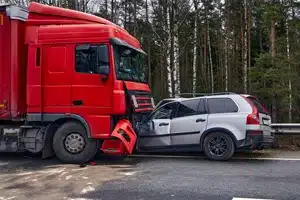
Atlanta is a major transportation hub. Every day, thousands of tractor-trailers and commercial vehicles navigate the Downtown Connector, I-285, and I-20. While we rely on these drivers to transport goods safely, the reality is that truck accidents occur frequently. When they do, the results are often catastrophic. One of the most frightening scenarios for any motorist is discovering that the commercial driver responsible for a wreck was operating their vehicle while under the influence of alcohol or drugs.
At
Simon Bridgers Spires, we have seen the devastation caused by impaired driving firsthand. If you or a loved one has been involved in such a crash, you likely have many questions about your rights and the legal process. Determining liability and holding the right parties accountable requires a deep understanding of both Georgia state laws and federal trucking regulations.
The Stricter Standards for Commercial Drivers
It is important to understand that commercial truck drivers are held to a much higher standard than the average motorist. While the legal limit for blood alcohol concentration (BAC) for most drivers in Georgia is 0.08%, the
Federal Motor Carrier Safety Administration (FMCSA) sets a much stricter limit for commercial driver’s license (CDL) holders. For a truck driver, a BAC of 0.04% or higher is considered driving under the influence.
This strict limit exists for a reason. A fully loaded semi truck can weigh up to 80,000 pounds. When a driver is impaired by alcohol, illegal narcotics, or even certain prescription medications, their reaction times slow down. Their judgment becomes clouded. A small mistake that might result in a “fender bender” between two passenger cars can turn into a multi-car pileup with fatal consequences when a massive truck is involved.
Investigating Impairment After an Atlanta Crash
Proving that a driver was under the influence requires swift and thorough investigation. Following a serious accident, law enforcement officers will typically conduct field sobriety tests or chemical testing if they suspect impairment. However, a criminal charge is only one piece of the puzzle. In a civil personal injury case, our team looks deeper into the evidence.
We examine the driver’s logbooks, toxicology reports, and post-accident drug testing results, which are required by federal law after certain types of accidents. We also look at the driver’s history. Has this driver been cited for DUI in the past? Did the trucking company know about a history of substance abuse and choose to keep them on the road anyway?
Who Is Responsible for the Damages?
When a truck driver is impaired, they are clearly liable for the damages they cause. However, they are often not the only party responsible. Under the legal doctrine of “respondeat superior,” an employer can be held liable for the negligent actions of an employee performed within the scope of their employment. Furthermore, a trucking company may be independently liable for “negligent hiring” or “negligent retention” if it failed to conduct proper background checks or ignored red flags regarding a driver’s sobriety.
By identifying all liable parties, including the driver, the trucking company, and potentially even third-party maintenance contractors, an
Atlanta truck accident lawyer can help maximize the compensation available to the victim. This is crucial because the medical bills, lost wages, and long-term care needs following a truck wreck can easily reach hundreds of thousands or even millions of dollars.
The Role of Punitive Damages
In most personal injury cases, compensation is designed to “make the victim whole” by covering medical costs and pain and suffering. However, in cases involving an impaired truck driver, Georgia law allows for the possibility of punitive damages. Punitive damages are not intended to compensate the victim but rather to punish the defendant for “willful misconduct” or “entire want of care” and to deter others from similar behavior. Operating an 80,000-pound vehicle while intoxicated is a prime example of the type of behavior that may warrant punitive damages.
How Simon Bridgers Spires Can Help
Navigating the aftermath of a truck accident is overwhelming. You are dealing with injuries, insurance adjusters, and the stress of a mounting financial burden. The trucking companies and their insurers will have teams of investigators on the scene almost immediately to protect their interests. You deserve a team that will fight just as hard for yours.
At Simon Bridgers Spires, we provide the aggressive and compassionate representation necessary to handle these complex cases. We understand the specific nuances of Georgia’s trucking laws and the federal regulations that govern the industry. Our approach involves securing vital evidence, working with accident reconstruction experts, and ensuring that every potential source of liability is explored to secure the full compensation you deserve.

